
Tārehutia te whenua e te tawhito

Tāwhiwhia te Tini a Kuī ki te whenua

Ka eke, ka eke te Māhuhu ki Kōutu

Takina te kawa ki Matatūāhu e Whakatau Pōtiki te toa tāmaua o runga Hawaiki

E tū nei a Maunganui

E tū nei a Taputapuātea hei pā tū hau i ngā tai e haruru mai e.

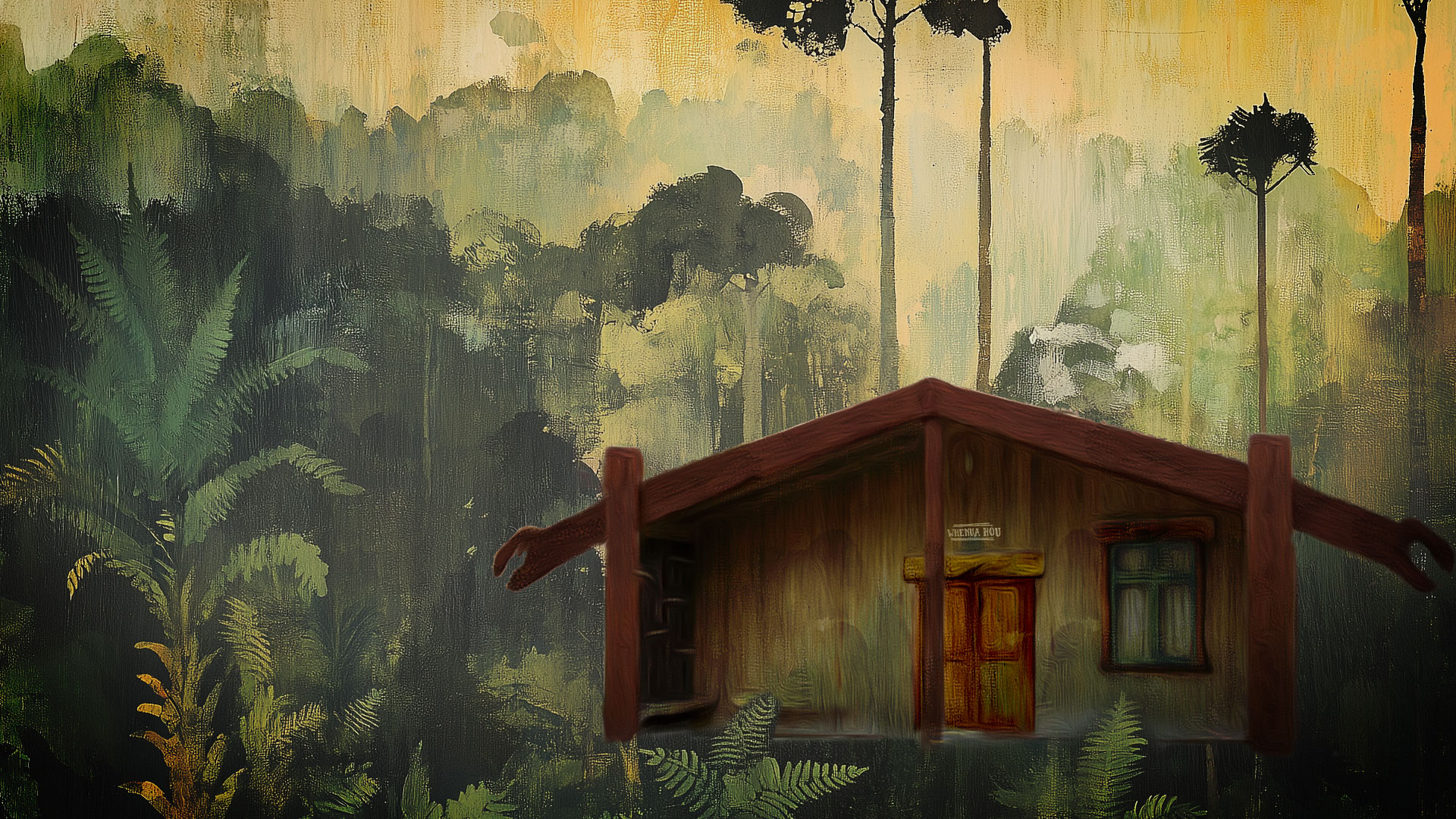
Uia mai he aha te take ki te whenua, ka mea atu ko te rau tītapu a Manumanu i whakatō ki Whenua Hou

Uia mai me pēhea raini te whenua e tiaki, ka mea atu ko Whaiputuputu te tauira!

Uhi, wero, tau mai te mauri

Haumi e, hui e, tāiki e!

Arrow Icon

Waipoua awa and the abound landscape has nourished and sustained this abundant and rich ecosystem since time immemorial.

The woven tapestry of life that clothe the land, the roots that bind the soil and hold the rocks allowing the waters to move, replenishing and hydrating the whole system from mountains to sea.

As tangata whenua, our whole identity and knowledge system formed to express the natural world that we are born of.

This intergenerational wisdom is contained and sustained in our language, whakapapa (the woven universe), narrative, song, textiles and dress, dance, art, cultural protocols and spiritual practice.

Tuputupuwhenua came from the interior of the earth and was not of this world. From his union with Hinekuī came Te Tini a Kuī the oldest known inhabitants of Waipoua.

They are tangata whenua. So too are their descendants!

Tangata whenua: Human earth - of the placenta of the land where our ancestors have lived and where our placenta are buried.
Arrow Icon

This is the inspiration for Te Toa Whenua, Te Toa Wai... It will be achieved by:

Reinstating principles of tangata whenuatanga

Restoring relationships to each other, to land and waters.

Reimagining tikanga tiaki to...

Revitalise Waipoua Whenua, Waipoua Awa, Waipoua Tangata through a...

Reawakening of the spirit!

Arrow Icon

Renowned throughout Polynesia for his many talents, Whakatau Pōtiki arrived in the area on the ancestral canoe, Māhuhu-ki-te-Rangi. His arrival and settlement in the new lands were ritualised at Matatūāhu, his sacred alter.

Intermarriage with the original inhabitants, Te Tini a Kuī ensued, consolidating bonds to the land and to the waters.

Arrow Icon

Generations later, in search of new lands and resources for their people, Ngāi Tamatea chiefs Manumanu and Rangitauwawaro migrated out of the Muriwhenua, eventually arriving in the abundant valley of Waipoua.​

Manumanu married the beautiful maiden Maearoa of the Te Tini a Kuī people, settling at the place he called Whenuahou (New Land).​

Arrow Icon

The eldest son of Manumanu and Maearoa was Manumanu II. Killed in battle, at his tangihanga his body was laid out on a kahikatea log. Lamenters commented upon the length of the corpse, exclaiming: ​

“Te Roroa o te tangata rei te kahikatea” (The length of the man is that of the kahikatea).​

In commemoration, the name Te Roroa was adopted uniting Te Tini a Kuī, Māhuhu-ki-te-Rangi and Ngāi Tamatea people’s of Waipoua*. After some 15 generations, this name still survives to this day.​

Arrow Icon

Waipoua is the ancestral heartland of Te Roroa. Consequently, the project area is host to many sites of significance and was once occupied by many Te Roroa chiefs, one of whom was Tuohu.

Tuohu was known for his industrious land use and ability to sustain his people through his agricultural prowess, knowledge of the environs and innovation.

His cousin, the high chief Tāoho referred to him as Te Toa Whenua the expert of the land. This is the inspiration for the project, and aspiration for the people

Arrow Icon

Tiopira Kīnaki, a high chief of Te Roroa, occupied these lands in the mid to late-1800s. He lived in a time of significant transition through which he sought prosperity for his people.

Te Uri o Tiopira are his direct descendants who sustain the unbroken occupation of the Waipoua since the time of Kuī and Tuputupuwhenua.

Arrow Icon

He poua ki tai, he kanae ki te wai, he tupu nō kai, he iwi mauroa i te rongopai

Poua in the tide, kanae in te waters, food on land, a nation embraced by peace

The kaupapa is emergent and reflective of the tangata whenua worldview of Waipoua. It is the motivation and the aspiration sought through Te Toa Whenua, Te Toa Wai.

Arrow Icon
Arrow Icon

These are cultural imperatives that regulate and guide the outcomes of our behaviours.​

Mana

The inherent and collective mana – mana atua, mana tupuna, mana whenua, is enhanced and maintained through courage, innovation, generosity and integrity.​

Tapu

We respect and uphold that which is tapu to us through dedication and practice of appropriate protocols and behaviours.​

Mauri

The mauri of land, waterways and people is vibrant. ​​

Whakapapa

We understand the whakapapa of all things and act in ways that consolidate healthy and strong relationships.​

Kawa

We will enact kawa that ritualise and sustain our cultural narratives to guide our actions and uphold our relationships.​

Arrow Icon

These are the actions that will be enacted to realise the kaupapa.​​

  • We adopt a holistic approach in all we do – this is our strategic advantage.
  • We understand the patterns and adapt to expertly navigate the realms of atua.
  • Kōrero tuku iho inspires how we do what we do through a curiosity for the ‘new-old’.
  • We orchestrate systems of connection between the right resources, knowledge and partners.
  • We apply healthy, regenerative methods of practice to achieve holistic wealth-being.
Arrow Icon

Te Toa Whenua, Te Toa Wai is a journey of relationships, an expression of oneness, and a reconciliation of the physical and spiritual realms through a living culture to bring forth an emergence into enlightenment – Te Ao Mārama.

The relational obligations that emerge from the mātāpono and enactment of tikanga will pave the way for deeper kinship connection between the spiritual world, the natural world, people and partners.

The norms and values that regulate our human-environmental activities will maintain the life-sustaining capacity of Waipoua for future generations in accordance with custom.

Ultimately giving rise to leadership that acknowledges the mana of Te Aotūroa.

Arrow Icon

The Waipoua is a large 5th order river flowing to the West Coast between Dargaville and the Hokianga Harbour of Northland, the catchment area is approximately 352 square kilometres.

The awa originates in the Waipoua/Matarāua forest and flows north-west to the Tasman Sea, passing through areas of native forest, plantation forestry, and rural land uses.

The Waipoua has been described as the “most pristine full catchment river system in Northland” (Miller and Holland, 2008). This is due largely to approximately 75% of the Waipoua catchment being within native forest. The remaining catchment landcover comprises around 6% pasture and 16% exotic forestry.

Arrow Icon

The Waipoua Conservation Park is one of the last ancient kauri forests in the world. These temperate rain forest ecosystems contain a vast array of native flora and fauna including unknown species, yet have been reduced to a staggering 1-2% of their original size.

A critical element within the Waipoua Conservation Park is its fresh water source which flows from the mountains to the sea via the Waipoua river and its tributaries, creating and supporting a myriad of unique and diverse ecosystems. The catchment is recognised as a place of profound importance and is one of Northland’s major iconic tourist destinations. The popularity of Waipoua creates significant challenges when balancing tourism development and conservation management objectives.

Arrow Icon
  • Largest/most significant old growth kauri forest in the world
  • Highest diversity of plants and animals of any North Island forest
  • At least 82 nationally significant and 68 regionally significant plants and animals, including several endemic species
  • The most pristine river catchment in Northland
  • Stronghold population of shortjaw kōkopu
  • Best altitudinal sequence in Northland from coast to high altitude swamp forest
  • Key site to protect North Island kōkako and 3 endemic plants
  • Site of collaborative active forest and whenua and awa restoration
  • Enduring persistence of ahi ka macron keeping the home fires burning
Arrow Icon
A range of taonga and threatened species are present in the catchment:
  • Fish: shortjaw kōkopu, longfin eel/tuna, lamprey/pihoro/kanakana, koaro and torrentfish
  • Plants: kauri forest, a Nationally Critical fungus (undescribed genus—Trichocomaceae), a moss (Fissidens integerrimus), native oxtongue, king fern and Bartlett’s koromiko
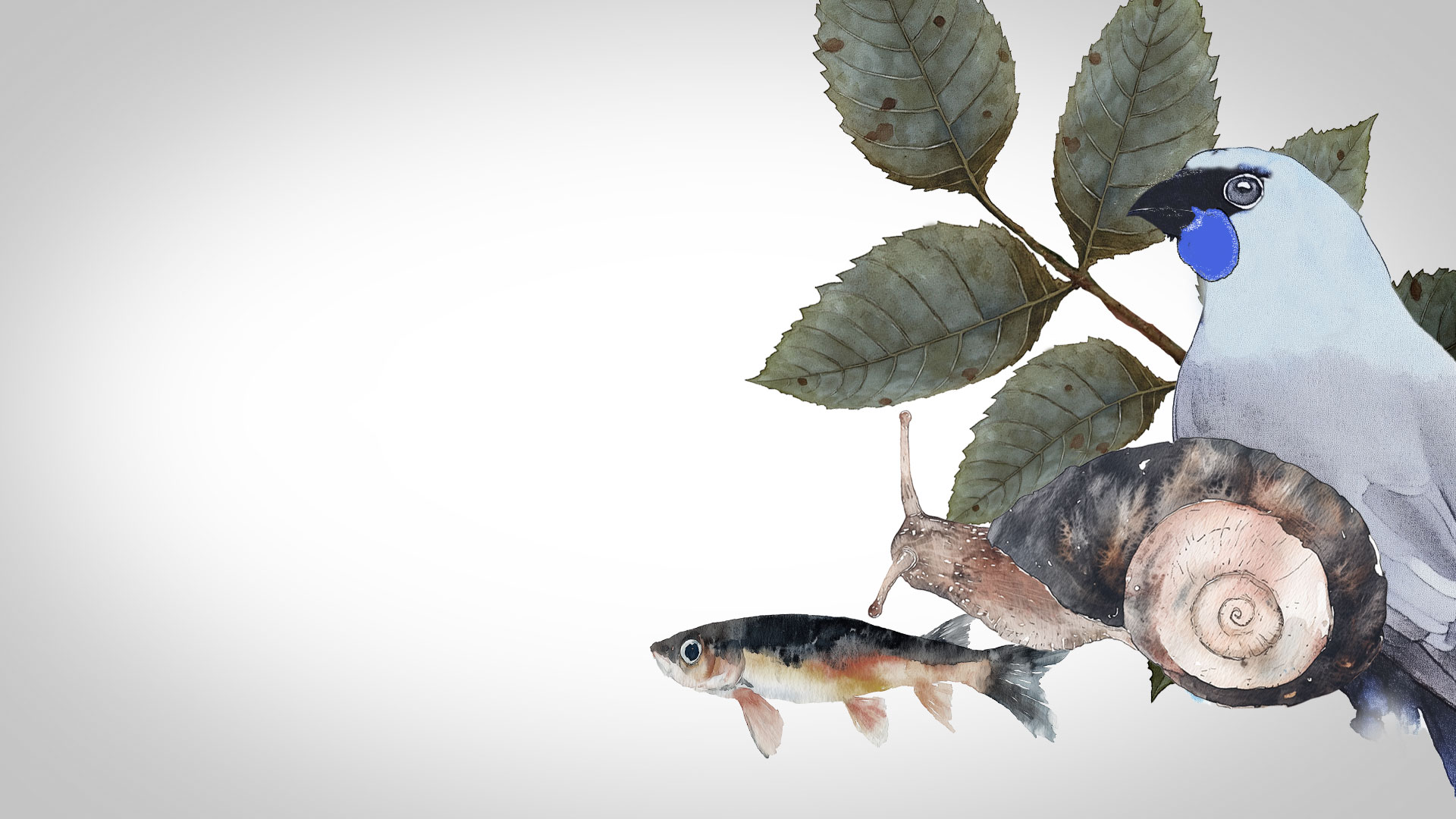
  • Birds: Australasian bittern/matuku-hūrepo (Nationally endangered), North Island brown kiwi, North Island kākā, kōkako, brown kiwi and fernbird/matātā
  • Other species: land and kauri snails, forest ringlet butterfly, Otekauri (ground weta) and Waipoua beetle
  • Kauri snails can be seen throughout the forest
Arrow Icon
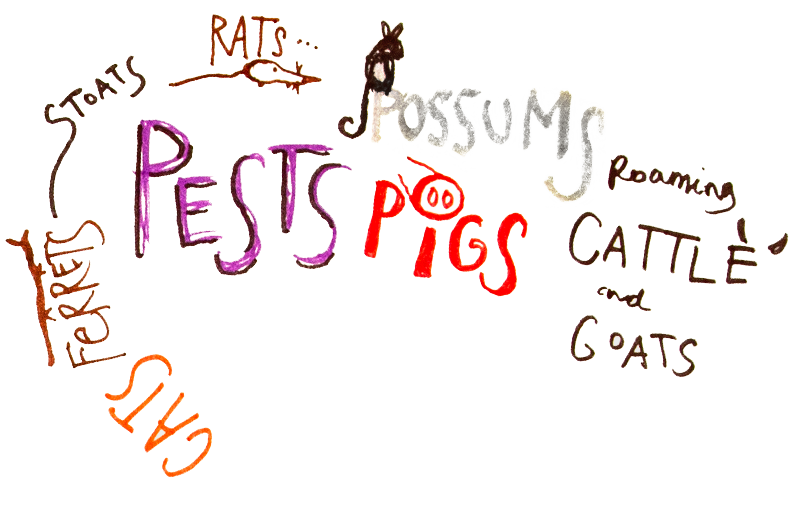
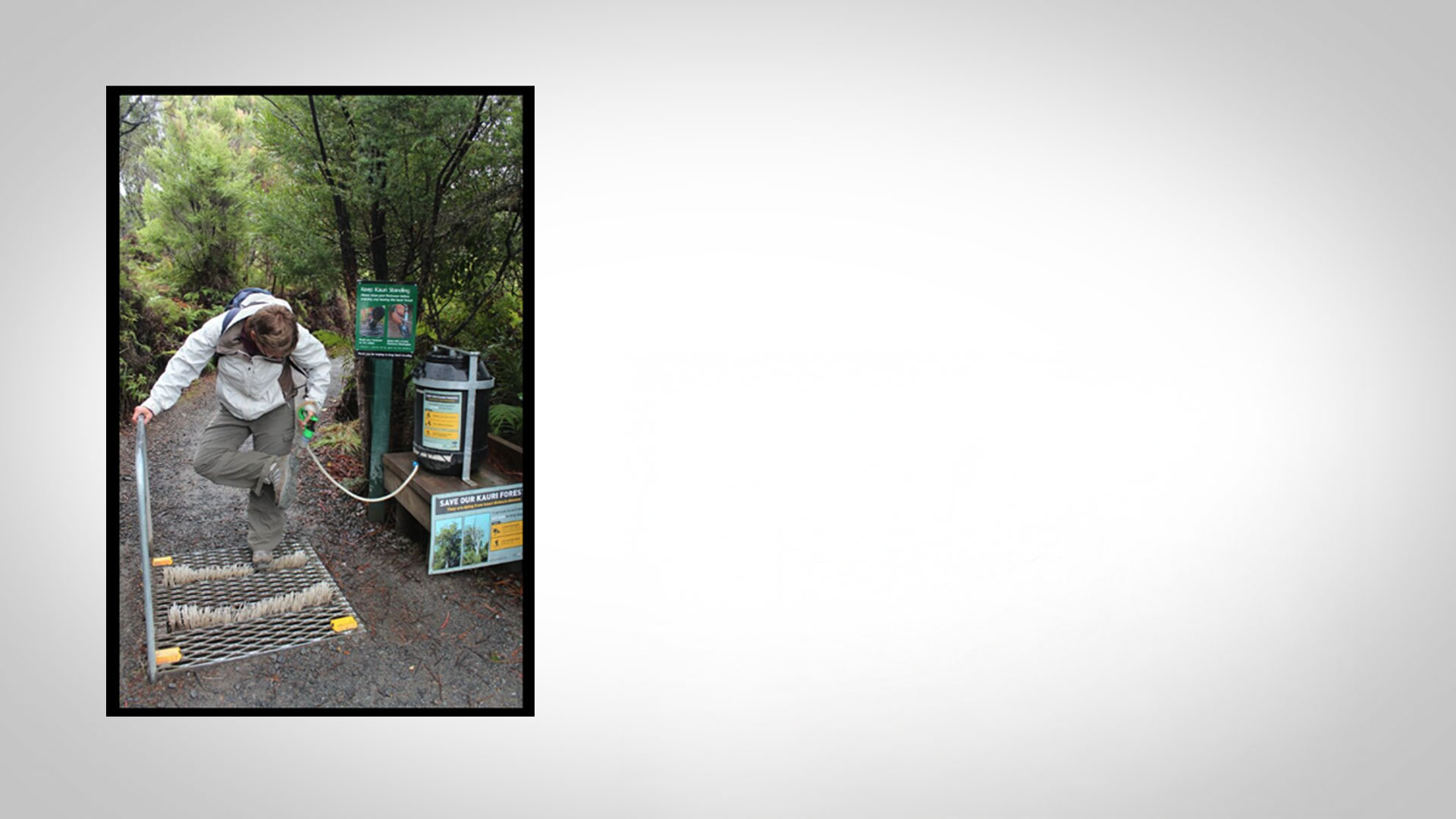
  • Kauri Dieback (PTA) biggest direct threat
  • Rodents widespread pressure on forest fauna
  • Possums are under sustained management
  • Stoats/Ferrets/Weasels predate on rare and endangered fauna
  • Pigs pose a threat to ground fauna eg, Kauri Snail, key vector for PTA
  • Goats are under periodic control
Arrow Icon
  • Weeds - controlled within 8 proposed management hot-spots
  • River ford - significant instream biodiversity impact
  • Pine forestry - impacts in the lower catchment both current and historic
  • Agriculture in the headwaters - impacts such as ecoli, sediment, nutrient and habitat modification
Arrow Icon
  • Nga Awa River Restoration (DOC & Te Roroa)
  • Landscape Predator control - ground and aerial 1080 (DOC & Te Roroa)
  • Te Toa Whenua (Te Roroa)
  • High Value Area (HVA) (NRC)
  • Kaitiaki Kiwi
  • He Ripo Kau
    • Te Aho Taiao o Waimamaku
    • Ōtaua ki Hokianga
  • Waipoua Forest Trust has a number of projects in the area, including replanting, pest trapping and dotterel monitoring at the coast, including near the Waipoua River mouth.
  • Native Forest Restoration Trust owns several blocks of regenerating forest in the Waipoua catchment and continues to seek funding to secure other land in the catchment.
Arrow Icon

Wai Ora​

Te whainga matua: The whakapapa of wai ensures the mauri of Waipoua and its tributaries is vital, sustaining life and wellness within. ​
  • Poua, kanae, tuna and kēwai are abundant in the waterways of the Waipoua catchment​.
  • The awa is connected and free from obstructions allowing fish to move freely.
  • Native riparian vegetation cloak the lower awa.
  • Ecosystem healthy habitats that support indigenous vegetation and species, and wetlands within the Waipoua are restored, and remain regenerative.
  • The environmental well-being of the Waipoua awa is enhanced through tikanga tiaki.
Arrow Icon

Whenua Ora

Te whainga matua: The whenua retains the life-giving properties to sustain healthy forest and food systems.
  • The forest ecosystem thrives with intact understory and canopy species and healthy populations of invertebrates, bats and birds.​
  • Kauri trees flourish free from the threat of kauri dieback and kauri snails will be seen throughout the forest.​
  • Kōkako populations throughout the forest and hop amongst the ancient trees of Te Matua Ngahere and Tāne Māhuta.
  • Kiwi calls are heard throughout, and kūkupa are abundant enough in towering miro trees to be harvested.
  • The forest will be draped in red during summer when the huge rātā trees are in full bloom.
  • Food trees, gardens and regenerative food systems provide food security for the valley.
Arrow Icon

Tangata ora

Te whainga matua: Equilibrium is reinstated through revitalisation of tangata whenuatanga, purposeful and manaful relationships:
  • Te Uri o Tiopira are tohunga tikanga tiaki [experts practitioners of ecological guardianship]
  • Te ahi kā roa – Te Uri o Tiopira are housed in healthy and robust homes.
  • Te Uri o Tiopira prospers through language, narrative, song, textiles and dress, dance, art, cultural protocols and spiritual practice.
  • Unity and reciprocal relationships strengthen the hapū
  • Hapū leadership ensures we leave our best mokopuna to the earth.
Arrow Icon

Whai Rawa

Te whainga matua: We have the right resourcing to sustain all that is important to us.​
  • Strategic partnerships provide access to resources that unlock the right opportunities.​
  • Nature-based enterprise create regenerative revenue for whānau and hapū.​
Arrow Icon